
Understanding
Glaucoma
A leading cause of irreversible blindness
Open-angle glaucoma (OAG) accounts for ~90% of all glaucoma diagnoses.4
It is believed that OAG develops when outflow of aqueous humor (the fluid in the anterior chamber of the eye) becomes impaired or fluid production increases, resulting in elevated intraocular pressure (IOP).1
Elevated IOP is the only modifiable risk factor for glaucoma progression.1
Over time, sustained high IOP can damage the optic nerve, leading to progressive, irreversible vision loss.5
Studies have shown a strong correlation between rising IOP and progressive loss of visual field.6,7
A related condition, ocular hypertension (OHT), is characterized by elevated IOP without signs of optic nerve damage.8
Current treatments, ongoing challenges
While OAG cannot be cured, disease progression can be managed through effective control of IOP.9 Standard-of-care therapies include:
- Eye drops that lower IOP, such as prostaglandin analogs (PGAs) including bimatoprost, latanoprost, and travoprost9
- Selective laser trabeculoplasty (SLT)9
- Minimally invasive glaucoma surgery (MIGS) devices9
- Filtering procedures that are more invasive than the above10,11
OHT shares similar risk factors with OAG and can be treated with eye drops or SLT.12

One million patients, one shared opportunity
An estimated 1 million US patients with glaucoma or OHT are expected to undergo cataract surgery annually.13
- This procedure—replacing the eye’s clouded natural lens with a clear intraocular lens (IOL)—is one of the most frequently performed ocular surgeries in the US14,15
- Glaucoma or OHT patients represent approximately 20% of all patients who undergo cataract surgery16,17
Treatment Gap
The challenge of lifelong adherence
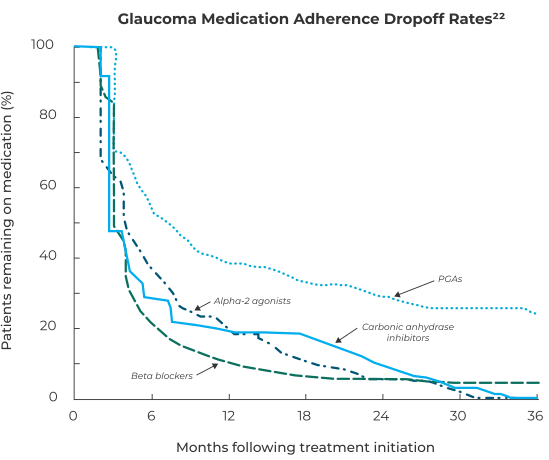
Historically, IOP-lowering eye drops have been the cornerstone of glaucoma therapy.1 However, long-term disease management depends on strict patient adherence—requiring accurate, lifelong drop administration, often multiple times a day.18,19
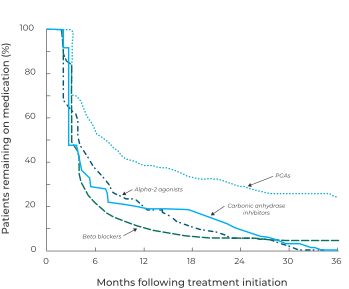
Adherence rates remain unacceptably low:
Adherence rates remain unacceptably low:
with their medication20
treatment within the first year21
Glaucoma Medication Adherence Dropoff Rates22

Long-term adherence issues
Barriers to adherence from the perspective of physicians:
50%
of physicians cited:
“lack of patient motivation to use drops”23
41%
of physicians cited:
“lack of patient UNDERSTANDING ABOUT GLAUCOMA”23
Results are from a study published in 2008, which consisted of structured interviews conducted with 103 ophthalmologists treating significant numbers of primary open-angle glaucoma patients in a national managed care network.
Prostaglandin drops in particular are associated with adverse events (AEs) that may negatively impact adherence, such as:
- Conjunctival hyperemia24
- Dry eye disease24

Impact of nonadherence
- Nonadherence contributes to poor IOP control25
- Because glaucoma typically progresses silently, treatment gaps often go undetected until permanent visual impairment occurs1
Limitations of current interventions
- SLT can lower IOP but is less effective in advanced disease and yields variable long-term results, with 20–30% of patients classified as non-responders26,27
- MIGS procedures are routinely performed by only one-third of cataract surgeons in the US.28 This low adoption rate may be due to:
- The need for specialized training to perform MIGS29
- Technical discomfort, as MIGS requires using the nondominant hand for gonioscopy while operating with the dominant hand30
- Workflow disruption, such as patient head tilting, microscope repositioning, and additional
follow-up care30,31


A persistent unmet need
There is a clear unmet need for a long-term IOP-lowering therapy that:
- Frees doctors and patients alike from administration and adherence concerns
- Enables all cataract surgeons to treat IOP, without the specialized training required for MIGS procedures